

There is a multicultural aspect to summer camp that is a great benefit to campers who attend summer camps in America. While standardized test scores dictate students’ admission into certain high schools, learning programs and universities, summer camp is an esteemed diversion. That a student ventured to America and invested a an American tradition so revered as summer camp provides foreign campers an opportunity to advance English skills and immerse in American culture that is almost un-rivaled. The big picture in those countries in which learning is the golden ticket is to learn and take in “all things English.” To experience summer camp is to give a student an advantage beyond any of his or her classmates. Four hours per week in school could never equate to those of several weeks spent at a summer camp experiencing traditions that are quintessentially American while forming friendships that last a lifetime. English is a language that is as much about experience as linguistics. It’s a complicated mix of culture with as many exceptions to rules as there are rules. The best way to understand English is quite literally to experience it. At camp, children can make friends, participate in activities and become a part of traditions that are more than camp: They live English. For those children seeking to become truly fluent in English and gain an advantage over their fellow students, summer camp is an essential investment.Posts Tagged ‘camp activities’
Multicultural Aspects of Camp
Tuesday, April 22nd, 2014
There is a multicultural aspect to summer camp that is a great benefit to campers who attend summer camps in America. While standardized test scores dictate students’ admission into certain high schools, learning programs and universities, summer camp is an esteemed diversion. That a student ventured to America and invested a an American tradition so revered as summer camp provides foreign campers an opportunity to advance English skills and immerse in American culture that is almost un-rivaled. The big picture in those countries in which learning is the golden ticket is to learn and take in “all things English.” To experience summer camp is to give a student an advantage beyond any of his or her classmates. Four hours per week in school could never equate to those of several weeks spent at a summer camp experiencing traditions that are quintessentially American while forming friendships that last a lifetime. English is a language that is as much about experience as linguistics. It’s a complicated mix of culture with as many exceptions to rules as there are rules. The best way to understand English is quite literally to experience it. At camp, children can make friends, participate in activities and become a part of traditions that are more than camp: They live English. For those children seeking to become truly fluent in English and gain an advantage over their fellow students, summer camp is an essential investment.Not Your Mom and Dad’s Arts and Crafts
Sunday, April 20th, 2014
Summer camp arts and crafts programs often conjure images of beading lanyards and tie dying. Indeed, crafts are still a large part of camp, but art is becoming equally as important. That is to say that camps are investing more in open ended mediums that encourage campers to use their creativity to create works of their volition as opposed to pre-determined projects of summer camps past.
The difference between art and crafts may not be immediately clear to those who envision a room at summer camp that houses a seemingly unlimited supply of paintbrushes, glitter, paint, markers, glue, construction paper, and beads. There is a marked difference, however. A recent article featured in Early Childhood News, M.A. and creative arts instructor Anna Reyer outlines the distinctions between art and crafts. Primarily art is open ended creations that evolve from a variety of supplies and minimal guidance. Crafts are pre-scripted projects assembled using specific supplies and guidelines with a finished product that is the same or similar for everyone. There is something to be said for both the “arts” and the “crafts” of arts and crafts.
Crafts are fun, and many a camper sings the praises of the relaxation and satisfaction derived from a few minutes of down time in which they are given a set of materials and a set of instructions and are left to their own devices. It is an opportunity to be social and engage in casual conversation with other campers and counselors. There is also a sense of satisfaction with the end product, a three-dimensional completed object that the camper created from a group of raw materials.
Then there is art, the benefits of which are becoming increasingly obvious to camp owners and directors. Art projects
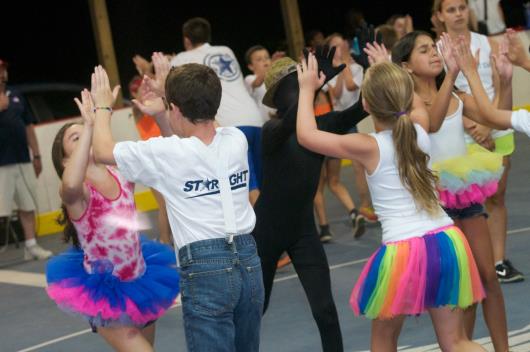
provide campers with a period of time during the day in which very little, if anything, has been planned for them. It is their time to create as they choose. Whether it is painting or creating a piece of jewelry, it is a sanctioned part of the day that is limited only by their imaginations. Camp in general is a creative space. Through art, it is also an imaginative space. It’s a space in which children are free to unwind and mentally process their feelings. Art is the perfect opportunity for campers to recharge and turn around a day that has been less than perfect. In that regard, similar things could be said about camp music, theater, and dance programs.
With the importance placed on creativity, fun, and happiness at summer camp, it is natural that summer camps invest big in arts and crafts programs. A memorable summer is more than just the glory of scoring a winning goal or swimming in the lake. Those times in which campers are left to their creative devices and are free to interact or not interact as they please provide crucial balance to the rest of the summer camp experience.
Who Goes to Summer Camp?
Tuesday, April 1st, 2014
A question about the type of children who go to summer camp recently popped up on an internet parenting debate board. The parent in question was considering sending her daughter to a summer camp but was afraid that she would not fit in. Among those offering an opinion, there were a lot of ideas based on stereotypes that seemed mostly derived from what people had seen in the movies rather than firsthand experience. Interestingly, not one of those people participating in the discussion actually sent their children to summer camp. But they knew someone, who knew someone who did. It was like the six degrees of Kevin Bacon summer camp style. But we do know summer camp. It is our lives, not just every summer but throughout the year, and we can describe firsthand the type of children who go to summer camp. Everyone!
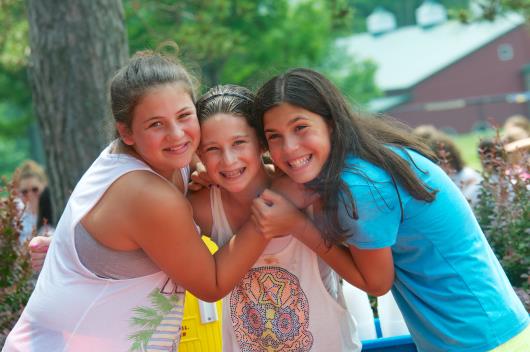
It’s true. There really is not a specific type of child that goes to summer camp. Campers who attend the many thousands of summer camps throughout the United States each year come from all walks of life, countries from around the globe, and have about as many different interests as there are types of camps. Here’s the secret. It is not about being the “type” of child that goes to summer camp. It is about finding the summer camp that is right for your child. Camps throughout the United States cater to different interests, budgets, schedules, religious faiths, just about every variable of which one could imagine. Closer to our own home (and hearts), America’s Finest Summer camps fall more into the traditional summer camp category. They are not strictly sports oriented. In fact, they offer plenty of niche activities. But they, as most traditional summer camps, are still considered “sports camps” because there is a lot of physical recreation. Children are encouraged to be active and enjoy the outdoors. Roughly half of each day at a traditional summer camp is focused on sports related activities. It goes without saying that sending a child who is not interested in sports to a seven or eight week camp with an athletic heavy program is probably not a wise choice.
For those ready to cross traditional camps off of your list because you’re sure your child is not the type of child who goes to a
traditional style residential summer camp, consider an alternative that is rapidly rising in popularity before you do: choice oriented summer camp programs. Choice oriented camps are sort of a hybrid between a traditional summer camp and special interest camps. In fact, more and more camps are now making their programs more choice oriented because these types of camps have become so popular with campers and their parents over the past several years. Camps that offer choice programs allow campers to decide which activities they do each day. Choice programs vary in the amount of control given to campers. Some offer schedules that are partially determined by the camp with campers having the opportunity to choose a certain amount of their daily activities. Other camps give campers total control, which means that even if the camp is technically considered a traditional sports related summer camp, campers have the opportunity to determine their level of athletic participation. Camps that offer full choice programs tend to draw a slightly more diverse set of campers than traditional sports camps and are typically a good fit for campers who want the traditional summer camp experience but who have special interests on which they’d prefer to focus.
The length of the camp is key in determining whether a camp is a good fit for your child. Children who have never spent any time
away from home or who have never attended day camp may find a sleepaway camp that lasts the full summer a bit overwhelming. And who could blame them? Imagine being a child who has spent every day of your life in an urban or suburban setting with mom and dad who suddenly finds yourself sleeping in a bunk or cabin with eight or ten other kids and a couple of college age strangers you just met in the middle of the woods. Yep…a bit of a culture shock, and for children who tend to be a bit skittish, shy, or particular about their daily and/or nightly routines, usually not a good one. In fact, most full summer camps recommend and even prefer that new campers attend day camp for a summer or two prior to enrolling for a residential program. For those wanting to test the waters with a sleepaway experience, consider trying a session camp with shorter sessions, usually three or four weeks.
All of this is not to say that there aren’t certain attributes that help a child become acclimated to a summer camp environment faster
than others. Outgoing, open-minded children who are willing to try just about anything usually get off the bus on their very first arrival day and blend right in as if they’ve been going to summer camp their entire lives. Children who tend to be more reserved may take a bit longer to ease into summer camp life, but the environment of summer camp tends to be one that facilitates acceptance and there are very few types of personalities that don’t eventually hit their stride. Generally, once children meet that special friend or find that favorite activity, self-confidence grows by leaps and bounds and any sort of trepidation they may have had when they arrived is left behind. In that regard, camp can actually be a good experience for those children who could use a little boost in the area of self-confidence.
So, if you’ve been thinking about sending your children to summer camp but haven’t because, like the parent on the parenting debate forum, you aren’t sure whether your child will fit in, remember that it’s really more about finding the right camp for your child’s personality and preferences. Once you find that, chances are that you’ll also find a group of campers with which your child will fit right in!
Yes, You Can
Tuesday, March 25th, 2014
“No” is a word that children hear a lot. No talking in the classroom. No running in the hallways. No playing ball in the house. No to anything that gets clothes dirty. No. No. No. With this in mind, it’s no wonder that “yes” is one of the many reasons that children so eagerly anticipate camp each summer. Of course safety is always a factor, and children also have parameters at camp for that reason. However, those parameters extend much further at summer camp than they do at home and school. At summer camp, campers are encouraged to climb walls, zip down ropes, run, get dirty and play ball. Even when they express doubt in themselves, they are encouraged with, “Yes, you can.” There is no pressure to be the best at something or to even be good at it, simply to try it. With such encouragement, many campers venture into previously unexplored territory and discover that they can, in fact, do things they previously thought they couldn’t.
The benefits of such encouragement extend beyond the development of courage to try new things. Children become more open to
possibilities. They develop the skills to venture out of their comfort zone and examine situations from different angles. A refined sense of creativity helps them attack tasks that previously seemed difficult or even impossible. They learn to comprehend the importance of trying, particularly when the time and place is right. With such perspective, “no” and “yes” become words less associated with ability and more associated with restraint. If they’re talking in the classroom, they can’t understand what the teacher is saying. School is not an environment that makes running in the hallways safe. Things tend to break when they play ball in the house. The clothes they wear when they’re not at camp are just a little nicer than the ones they tend to wear at camp. In contrast, camp is a safe environment for them to talk, laugh, run, play, climb and get messy in ways that are productive. In short, it’s an environment with less restraint in mind. Once children are able to understand the symbiotic relationship between “yes” and “no,” they are better able to accept “no” for what it actually means: It’s not in your best interest.
Camp Brothers & Camp Sisters
Tuesday, March 11th, 2014
There is no doubt about it; we all have someone we look up to in life. And as we grow older, whether we know it or not, someone looks up to us. In the Camp Starlight world, this idea goes hand in hand with Camp Brothers/Sisters.
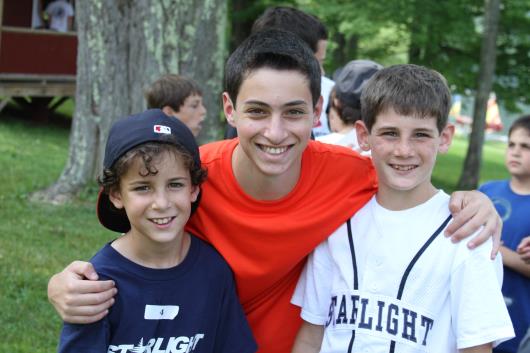
During the first few days of camp, everyone gets a Camp sibling, in regard to their respective campuses. Camp sibling activities are popular throughout the summer, and range from Brother/sister lunches, campfires, afternoons at the waterfront, and even a few evening activities.
Younger, first time campers are given a “Big Brother/Sister”, some are even lucky enough to have two!
The excitement amongst the youngest campers is buzzing from the moment they find out they are about to receive their Camp Brothers or Sisters.
They know they will have an older, experienced camper to look up to and go to for advice. They feel comfort in having someone from upper camp that has been in their shoes, cheering them on and supporting them during their “Camp Firsts.”
Once children get a little older, some will be middle brother/sisters, meaning they have a younger and an older sibling. This is a time when they get the joy of having an older sibling to look up to, but also get to be a role model for their younger sibling. They get the best of both worlds, supporting younger campers, and getting support from their older sibling.
Finally, the oldest campers at Starlight are given younger siblings. After years of looking up to their “Big brother/sister” they are finally the ones who everyone else looks up to. It’s time for these campers to mature, and become role models for the younger campers. They also feel a bit of responsibility and knowledge on how to comfort their younger brother/sister when they are trying something new at camp, because they have been there themselves.
Camp Brothers and Sisters relationships last much longer than just one summer. Every summer you’ll hear campers talking about their previous camp siblings, still exchanging hugs and smiles as they pass one another. The relationships these children make with one another is unlike any other role model, and have the ability to last a lifetime.
Camp Pets
Saturday, March 8th, 2014
Experts unanimously agree that there are benefits to pet ownership for children. In addition to teaching them responsibility, pets also entertain children, keep them active, alleviate stress and teach them about life. For some families, however, busy lifestyles make pet ownership impractical and even unrealistic. Enter another little known benefit of summer camp: summer pets. Many camp nature, exploration, and eco-science programs include an animal or two. Because of allergies, camps tend to shy away from common household pets such as cats and dogs. Rather, animals with naturally reserved demeanors that are easy to handle like reptiles, rabbits, turtles and guinea pigs are preferable when it comes to camp pets. As a result, even campers who have pets at home get the opportunity to handle, care for and observe – to their comfort level – animals they may not frequently encounter. Those campers who do not have pets at home get to experience the joy of pet ownership and all of the benefits of it while those campers who do have pets at home tend to miss them less when their camp has animals. Camp pets sometimes double as mascots and campers come to view them as part of their camp. Best of all, everyone at summer camp, regardless of whether they have pets at home or not, has the opportunity to have a pet for at least a few weeks each year.
Popular Sports at Camp
Thursday, February 6th, 2014
There is a decided difference between popular school sports and popular camp sports. Most schools throughout the nation focus on key sports like football, baseball, softball, basketball, volleyball, and soccer. At summer camps, campers have much more exposure to non-traditional sports that receive decidedly less promotion through school but prove rather popular at camp, in spite of—or perhaps because of —the fact that they are not widely promoted in school environments.
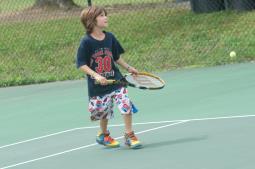
Tennis is a sport to which most children are exposed for only a few weeks of physical education class each year. At camp, however, it’s one of the most popular and beloved activities. Campers have the opportunity to play several hours of tennis each week on quality courts and even participate in intra and inter camp league play. Furthermore, the instruction is excellent. Many summer camp tennis directors are former tennis pros who have played at the elite level in premiere tennis competitions.
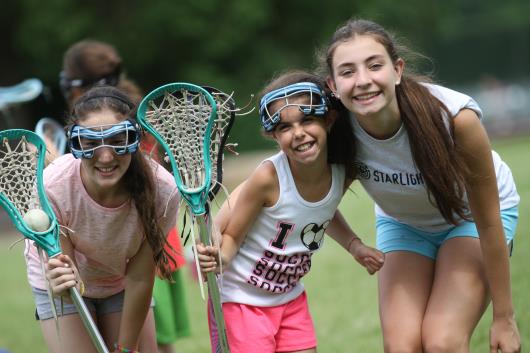
Lacrosse, although popular in New England and other pockets of the Eastern United States, is not widely played in many regions
of the country. Yet, it’s one of the most popular camp sports. Many summer camps offer extensive and ever growing (by popular demand) lacrosse programs. Most camp lacrosse specialists play at the college level and many lacrosse heads coach at the college level. Campers who hail from geographic regions in which lacrosse is still an underdog sport have the opportunity to receive valuable, quality instruction that surpasses anything available where they live. In fact, many of these campers play lacrosse for the first time while at summer camp and discover a new favorite sport.
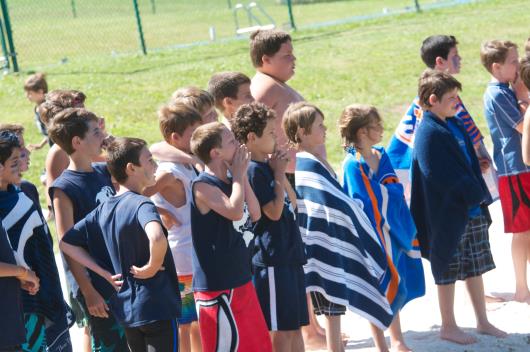
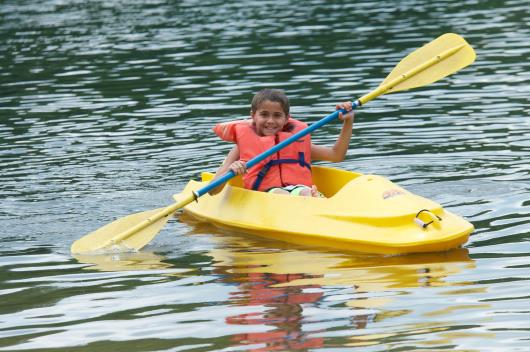
For children who love water, boating is another popular camp activity to which most campers receive little to no exposure during the school year. Camp waterfronts are a crucial part of camps, and campers spend a lot of time in or on the water at camp. To sweeten the pot, summer camps make various types of boats available so that campers can try their hand at canoeing, kayaking, sailing, and even stand-up paddle boarding. Waterskiing is another popular water sport on which many camps place a particular focus. Campers have the opportunity to waterski throughout the summer, and some of the most enthusiastic camper responses every summer are those of campers who get up on water skis for the first time.
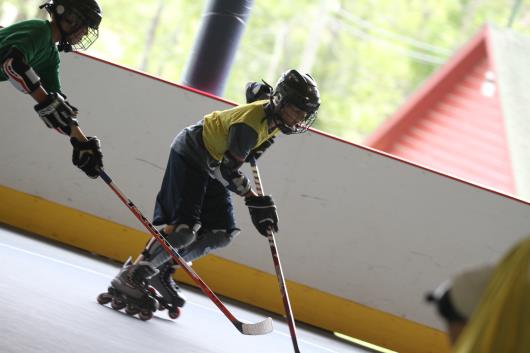
Campers race to suit up for roller hockey. It’s an action packed and fast paced sport that is fun to play and a key activity in many camp programs. Not only do a lot of campers embrace an otherwise unfamiliar sport in roller hockey, they learn how to skate as well!
Archery. Most schools don’t offer archery, even as part of a physical education program. But it’s a regular part of camp, and pretty much every camper who takes aim at the bulls-eye throughout the summer will tell you that it’s a fun one.
Golf. Yep, many camps offer golf instruction as well. Campers love to relax while driving balls and working on their strokes. They also like that golf is a sport in which it is relatively easy to measure one’s level of improvement throughout the summer.
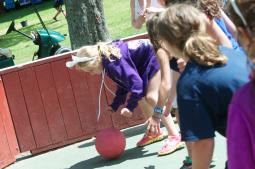
Gaga is practically synonymous with camp. It’s serious business there, and it can get intense. Gaga is practically unheard of outside of the camp realm. Still, ask virtually any summer camper to list their top five favorite activities at camp, and chances are that gaga will appear somewhere on that list.
Many a camper engages in what will become a favorite sport at camp for the first time. Perhaps it’s because some sports are a rare
treat that, if it wasn’t for sleepaway camp, campers know they would never get to experience and, therefore, are eager to embrace. It can also be that campers find the newness of such sports refreshing in respect to the typical repertoire of school sports. Either way, summer camp is an excellent way for campers to receive exposure to and quality instruction in sports that may not be so popular at school but prove very popular at camp.
Looking through Camp Photos…Again
Thursday, January 30th, 2014
Admit it. During the summer, you just scroll through the camp photos looking for any part of your child—a pose with friends, a smiling face, an arm, a shoe, a finger—anything that you can bookmark and study intensely to see what information you can garner using every technique you’ve ever learned from Law & Order. But have you ever gone back through the photos months after camp ends and just browsed at large, not just at your children, but at camp at large? If you haven’t, you should.
Camp photos aren’t just random shots caught by the camp photographer as he or she
casually passed by. They tell a story. The story of camp and how the summer unfolds. The camp photographer is, undoubtedly, one of the hardest working people at camp. In fact, the work is so difficult, that many camps employ more than one, plus a videographer or two. Camp photographers are some of the first people out of bed each morning and some of the last to go to bed each night. Daily, they are charged with capturing the spirit of camp in pictures. If that sounds easy, try making around several hundred acres to capture about twenty activities happening simultaneously. On top of that, you’re taxed with trying to capture images of each and every camper each day. It’s a task. But a valuable one. Because, at the end of the summer, what a camp photographer leaves behind are images of the best moments at camp.
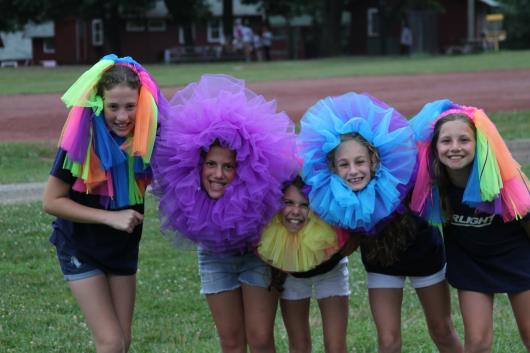
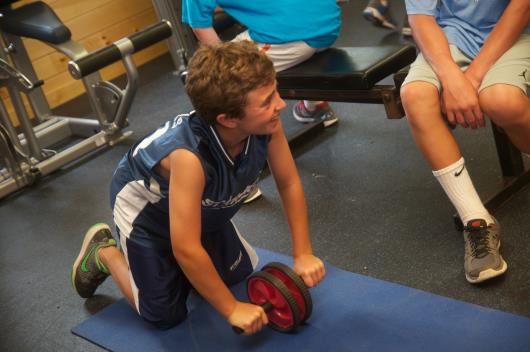
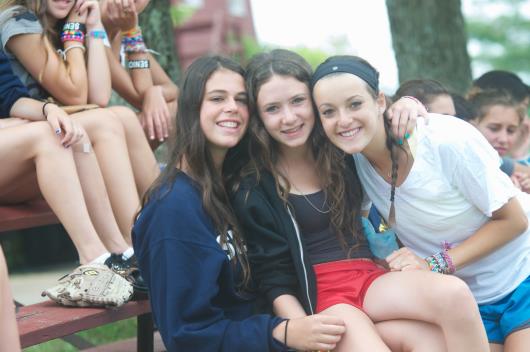
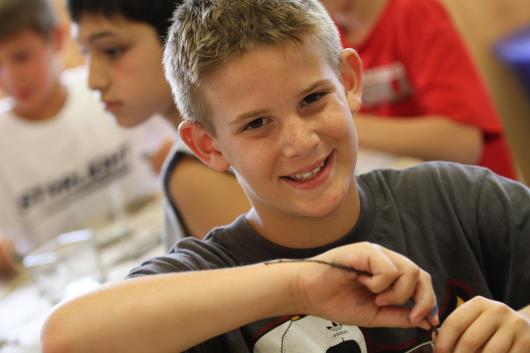
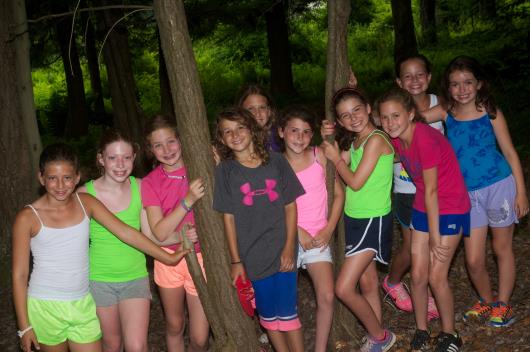
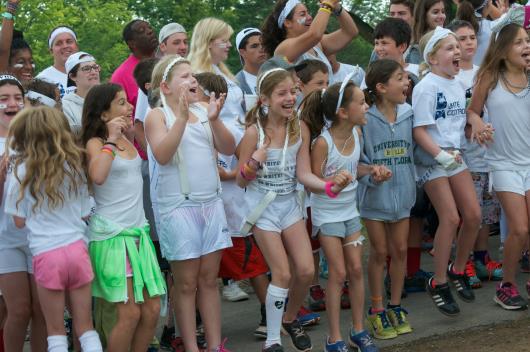
If you look back through the camp photos, you see friends enjoying time together in arts & crafts, sports teams in action, candid shots of campers living in the moment of whatever activity in which they are participating, being reflective, or just taking it all in. You also see moments of true surprise, awe, joy, and even disappointment. You can literally relive the summer by looking through the camp photos. If you want to know what your child is up to, scroll for the photos of our child. But if you want to know what is happening at camp, take the time to look through the camp photos…again.