
Posts Tagged ‘Benefits of Summer Camp’

A Respite from Technology

Tuesday, June 25th, 2013

We recently read an article on the American Camping Association website entitled Who Are Your Campers? The article included a rather interesting illustration of statistics about children today.  One of the pieces of data that most caught our eye was the statistic about children and media.  According to the illustration, children today spend, on average, 7.5 hours with media.  One of the key points of summer camp has always been the greatly reduced exposure to technology.  It’s recommended that children sleep 8-10 hours a night, which leaves 14-16 hours left in a day.  That means that approximately half a normal day for a child involves the use of media or technology of some kind.  Even schools are focusing on transitions to electronic based curriculums.  In contrast to the considerably less media exposure of previous generations, it’s easy to assume that summer camp must be practically culture shock to modern children who.

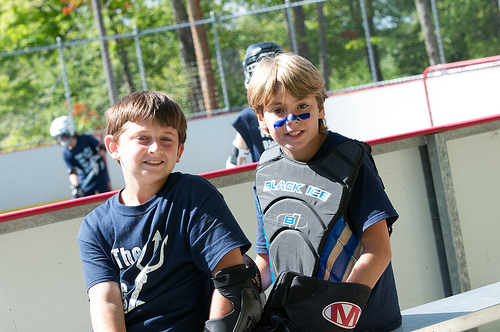
Although many camps offer activities, such as video and photography programs, the noticeably fewer technology options at summer camp leave campers with a considerable hole to fill.  This is where athletics come into play.  There is no shortage of sports at Camp Starlight, and campers quickly become very involved in both their intra and inter camp teams.  The lack of outside distraction allows them to focus on athletic performance.  Although it’s not about winning, per say, for the majority of campers, an astounding number of them voice pride in the improvement of their skills since last year or vocally share their objectives for this year with coaches and counselors over the first few days of camp.  They clearly come with goals, which suggests that, contrary to what one might assume, campers actually anticipate a break from media outlets and look forward to it enough to take the time to outline ways in which they hope to improve themselves during their summer camp experience.
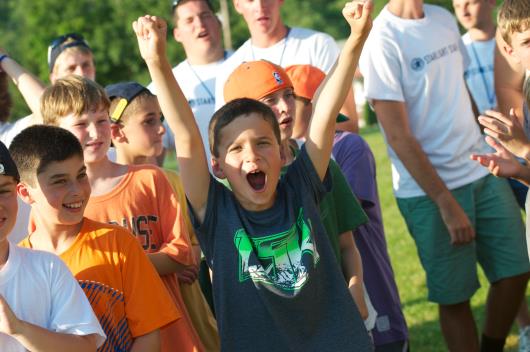
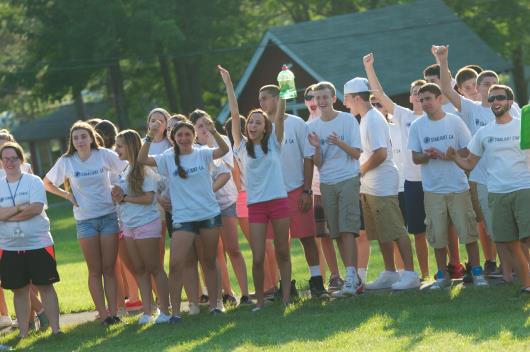
Summer camp used to be thought of as an escape to fresh air and nature from urban jungles.  Perhaps it still is for some.  It seems, however, that it has just as much become a respite from technology and the emphasis on social media that has overtaken the lives of contemporary children.  Campers spend time at camp focusing on qualities of life that have taken a backseat to technology in recent years: the value of face-to-face communication, spending time outdoors being active, working toward personal goals in improving skills in sports or hobbies.  This is one way in which the motivation for coming to summer camp may have changed but the hoped for end result is still the same.  This also is what keeps summer camp a timeless option for filling children’s summers.
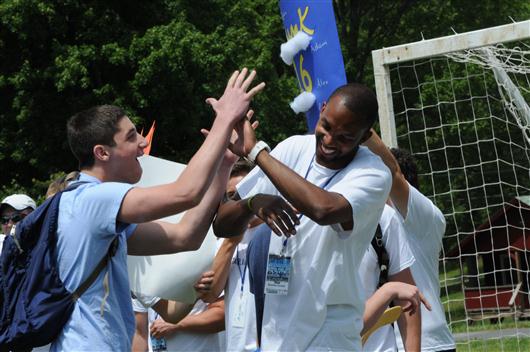
A Camper Reflects on the Day before Camp Begins

Saturday, June 22nd, 2013

With just about 24 hours and counting before the first buses full of campers drive up the camp road, we thought it the perfect time to share this blog that one of our campers submitted about how excited he is for camp to begin:

I am nearing the first day of camp. Every thought in my head reflects towards the memories and friendships I have made at camp; the buses pulling in, the opening night show. The countdown is almost over. Soon, I will be meeting my new counselors and reuniting with my friends that have proven to last a lifetime. Camp is almost here.

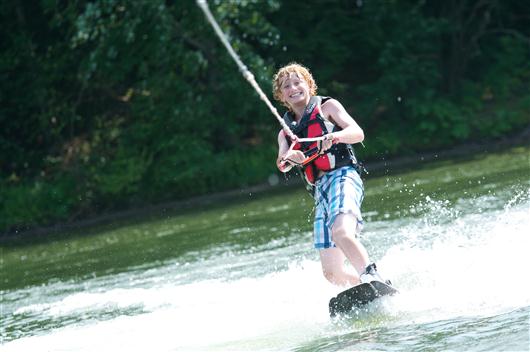
As a returning camper the spirit and cheering of the first minute you set foot onto the clinic field makes you feel that you are home. The thought in your head of, “Wow! I’m going to be at Camp Starlight tomorrow!” really just puts an emphasis on the popular saying, “ I live 10 for 2.” Being part of the Starlight family for my 5th year as a camper, I have grown to love every activity and cherish every single moment I am at camp. From feeling free zipping down the top of the ropes course, to catching my first fish of the summer, and making it all the way around the second lake on a wakeboard, these are just a few of my goals to accomplish at camp this summer.

I came to Starlight the first year of camp, and I hated tennis. I didn’t know how to play, didn’t enjoy any of it, it was not something I wanted to do. Finishing camp last year, tennis is now one of my favorite sports, and I look forward to playing with some of my best friends. With new facilities and additions added to the campus, I am excited to try new things I would not be able to do at home.

Who else is as excited as I am for tomorrow?

Eye on the Bullseye

Tuesday, May 21st, 2013

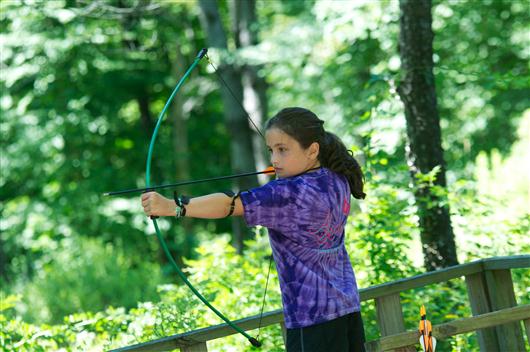
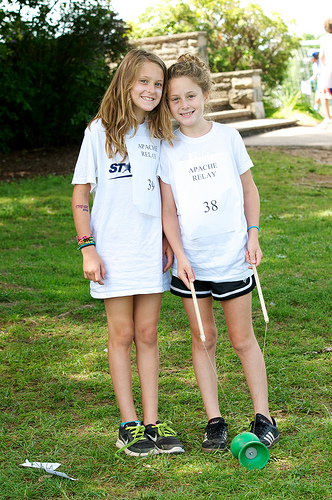
As long as there has been summer camp, archery has been a part of it.  Although the amount of available activities at summer camp has grown immensely since the early days of camp, archery still remains popular.  It’s a classic outdoor sport that doesn’t require the stamina or athletic prowess of, say, soccer, but a good eye, good aim, and precision when firing.   There is a certain amount of satisfaction in being able to see yourself move closer to achieving a goal.  It’s not always apparent that your swim stroke has gotten better since the beginning of the summer, or that your baseball pitch has improved over the past couple of weeks.  Although your counselors and friends may compliment you and tell you that you’re better than you used to be, there isn’t really anything tangible for you to immediately be able to tell for yourself.  With archery, however, there is a target with a bull’s-eye on it.  It’s not at all unusual for campers to begin the summer not even being able to hit the target and then, as the summer moves along, hit and then inch closer and closer to the bull’s-eye.  The closer they get to that bull’s-eye, the more arrows campers want to shoot.

It seems like a small goal, and it is really.  However, it’s still an exercise in goal setting.  Hitting the bull’s-eye requires focus, and being focused requires you to survey your surroundings, determine where you need to aim, and then focus on the details as you attempt to hit your target.  Being successful at archery requires this same effort from everyone.  Campers have no advantage if they run faster, jump higher, or throw harder.  Every camper enters the archery range on a level playing field with the same potential for hitting a bull’s-eye.  Some get lucky, some work hard.  Either way, archery promises a path to success for anyone who is willing to set a goal, take aim, and work hard.  Perhaps that is why after decades of being a summer camp staple, archery remains one of the most popular activities.

Summer Camp: Otherwise Known as Mission Combat Boredom

Monday, April 22nd, 2013

Memorial Day is just around the corner and, soon after that, schools will be letting out for the summer.  If you and your significant other are already taking bets on how many days into summer vacation your child will get before proclaiming ‘I’m bored!’ don’t fret.   It may not be too late to combat summer vacation boredom with camp.

First, run–don’t walk–to your computer and submit that summer camp application that you’ve been meaning to submit since October. Although many camps are at capacity for this summer, some camps still have limited space or can place your child on a waiting list in the event of a last minute cancellation.  But time is definitely of the essence now so don’t dilly dally anymore!  If you’re still on the fence and wondering what summer camp do to fight off summer boredom that you, the local pool, or the latest videogame system can’t do, consider this:

For starters, does your local pool have a water trampoline or a rockit?  How about a climbing wall or a rope swing? Does it offer tubing or paddleboarding?  And can your child choose between a sailboat, canoe, or kayak?  Does the park offer waterskiing?  Didn’t think so.

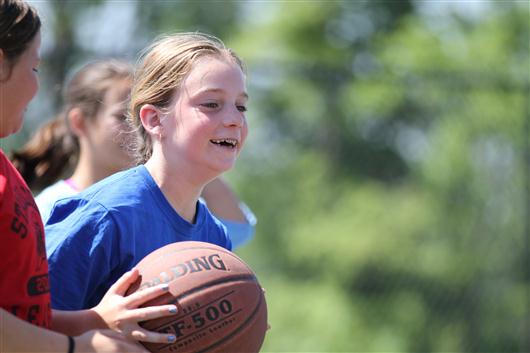
But it’s not just the waterfront that makes summer camp “camp.”  That’s a couple of hours of each day, of course, but there are ball fields and courts, too—baseball, basketball, soccer, tennis, lacrosse, football, hockey…All in one campus!  On any given day at summer camp, campers visit several of them.  They don’t just play intramural games either.  They receive instruction from knowledgeable professionals who work with children year round either as coaches or teachers or college students with significant playing experience a sport who hope to work with children when they graduate.  Campers are challenged to improve their foul shot, learn a new swing, and maintain more control of balls while dribbling.  Traditional summer camps are a virtual sports paradise.  You’ll probably read about that when you receive your first letter from camp in which your child tells you that he or she is so NOT bored!

Away from the fields, there are some pretty sweet crafts, ceramics, and woodworking projects for campers who have a passion for all things that have a high potential to be messy.  They’ll spend an hour or two everyday making a collection of new masterpieces to bring home to you and, when they do, you WILL find a special place to show it off, even if you’re not immediately sure what it is.   It’s a pretty good bet that your child will spend at least two minutes of a phone call home telling you how much FUN it is to nail pieces of wood together or spin clay on a pottery wheel.

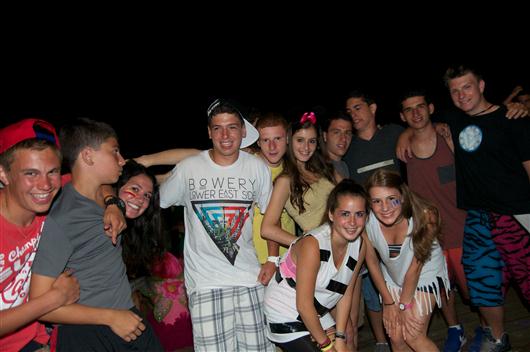
Without electronics, iPods, and videogames to retreat to after dinner, evenings can get kind of crazy.  There are sing alongs, dance competitions, spirit competitions, talent competitions, and stage shows.  If you’re having a hard time imagining your child taking the stage and liking it, don’t worry.  We take photos.  You can spend the entire summer hitting the refresh button on your computer screen while looking at photos of your child not being bored.

There is also square dancing, sports leagues, scavenger hunts, carnivals, cookouts, dances, outside entertainment, and campfires.  We haven’t even mentioned out of camp trips to take in sporting events, catch a movie, or visit a local amusement park.

If you’re out of breath just reading this, so are we.  And we haven’t even mentioned everything.  In fact, there is so much to do at camp that on some days the hardest decision for many campers is what not to do.  So make this summer the first of your child’s ‘funnest summers ever!’ by sending him or her to camp, where there is no such thing as “bored.”

Learning to Be Resilient at Summer Camp

Wednesday, April 17th, 2013

Resilience is the ability to adapt quickly to change or bounce back from setbacks.  In addition to the many benefits available to a child who attends summer camp, one that proves invaluable for many years afterward is gaining resilience as a life skill. In the everyday happenings of summer camp, a camper is given many opportunities to exercise their independent thinking skills on many levels. They find themselves in an environment that not only provides the situations to obtain these skills but also fosters growth within the individual. Perhaps the most effective part of this development, as with many of the lessons learned in camp, is that in the moment it hardly feels like a “lesson.”

During a summer at camp, the scenarios that improve a camper’s resilience are all around them. Everyday, campers excitedly head to the Outdoor Adventure area where they take to the climbing walls, ropes course, and zip line. The Ropes staff, with their extensive training and certifications, provide the arena for adventurous acts of bravery, even when first attempts aren’t exactly successful.  Down at the waterfront, swimmers of all skill levels are diving in and learning new things too. At each and every program area, you find campers trying an activity for the first time as well as campers enjoying participating in an activity in which they are very experienced. Both of these scenarios prove beneficial to the camper; when children try new things and their peers are there to cheer them on and encourage their efforts, the campers gain a sense of camaraderie and inclusion. Because of this boost to their self, they’re more likely to want to continue improving.  On the other end, when a camper is given the opportunity to display excellence in a field in front of his or her peers, there is a power in the identity found when the child feels confidence in this environment.

Situations like these mentioned, and hundreds more that present themselves, throughout a summer, create situations for campers to think situations through and move beyond the moment with resiliency in the camp setting and, furthermore, to return home with a new or better set of life skills. They have spent a summer away from mom and dad, and they have been exercising the act of identifying what they need and either obtaining it or asking our experienced counselors and staff to help them obtain it.  They create friendships amongst kids like and unlike themselves from various parts of the country and even globe. They leave with a better sense of their own culture, having encountered cultures outside of their own. As they take part in the culture at camp, they are given a great sense of being a member of a team and the chance to belong.

Going to Camp with Your Siblings

Sunday, March 10th, 2013

They may fight like cats and dogs at home, but attending camp together is special for siblings.  Parents may be surprised to learn that at camp, they don’t accuse each of being the one to lose the television remote.  Instead, they wave and smile when they pass each other on campus.  They don’t fight about taking up each other’s space in the car either.  Instead, they make special meeting places to talk about camp—everything they’ve done, new things they’ve tried, new friends they’ve made, and how their sports teams are doing how they got a bullsyeye in archery or are going to be singing a song in the show.  Siblings don’t taunt each other when they do something silly at camp.  They cheer for them.  And, parents, you may be surprised to learn that siblings don’t pretend that each other has an infectious disease that prevents them from ever touching at camp.  They readily hug.

As you can see, summer camp may as well be Hogwarts for its ability to transform sibling rivalry into a special relationship.  Camp is a distinct set of memories they share apart from their parents.  Those camp experiences will always be just theirs, which creates a bond that helps them grow as brothers and sisters as well as individuals.  It’s an opportunity that many children who do not attend sleepaway camp don’t get to experience until adulthood.  By being able to share a special set of traditions and values, siblings are able to appreciate their relationships at a much earlier age.   The thrill of seeing each other experience camp firsts and pass camp milestones also helps them learn to appreciate each other as individuals.

And, let’s face it, we know that seeing your children smiling together in a camp photo after hitting the refresh button a thousand times each day makes it all worthwhile for you.  Those smiles are why you put them on the bus or plane each year.  They’re why you post the photos to your on Facebook pages and pass them around, accumulating likes.  You  love hearing them asking each if they remember a certain time at camp or singing the same songs and doing the same cheers.  In that respect, being able to send your children to summer camp together is special for you too.

F-U-N!

Thursday, March 7th, 2013

In an age where our eight year old kids know more about technology than some Fortune 500 CEO’s, it is apparent that children are “growing up” at a rate faster than anytime before. There’s no doubt parents everywhere find themselves frantically Googling terminology, mathematical equations, and whatever these dangling participles are to save face when “helping” their kids with homework every evening. Did I ever learn this?!? I thought I did these projects in college! What exactly is the difference between kinetic and potential energy again? It’s mind blowing to look on as a fourth grader puts together an Excel spreadsheet with the expertise of a veteran accountant.

While it is encouraging to know that if this whole 7th grade thing doesn’t work out, a kid can take over in the accounts payable department at my company, you have to wonder if all of this stuff might be also turning our kids into far too serious people much too fast. Whatever happened to good old fashioned fun? At Camp Starlight fun is something that we still hold as important, vital, and a key principle to our summer program.

When our campers exit the buses on opening day, they leave behind the long days of sitting in desks, staring at computer screens, and daydreaming through the windows about the great outdoors. They know the days ahead will be full of a glorious thing called fun! Starlight’s daily program areas are specifically designed for our campers to discover new hobbies, sports, and talent and give them the opportunity to improve and enjoy activities with which they are already familiar. Every area is open for exploration! Parents are always surprised to hear that their sports obsessed sons have wowed the Starlight community with amazing performances in their division’s theater production.  They are jumping for joy when they check the daily photos and find their “shy, quiet” child decked out in some crazy get-up, hands in the air, dancing with 15 of their nearest and dearest. We are right there with them, reveling in the excitement of kids just being kids.

The power of play and the idea that it is ok to let loose and have fun has an incredibly positive impact on kids. Camp Starlight is dedicated to providing our campers with the constant opportunity to enjoy being a kid. Every night our campers enter a world of game shows, obstacle courses, mad science labs, and more. And head to sleep each might dreaming of what the next day may bring. Whether producing an original film in Video, waterskiing around the lake, perfecting a magic trick, or dribbling a basketball for the first time, they can and will do it! So here’s to counting down to 2013 bringing another summer jam packed with F-U-N!!!

Lindsay

Learning to Lose at Camp

Saturday, February 16th, 2013

Whether it’s a school spelling bee or a soccer game, as parents we want to see our children win not just to experience the joy of seeing them excel but because we know that they want to win.  Being raised in a competitive culture naturally makes us all want to be number one.  Children equate being number one with being the best.  However, as grownups we know that it’s impossible to win all of the time and that winning doesn’t necessarily mean being the best so much as being the best on that particular day.  The idea that losing, in reality, is closer to not winning in that it’s possible to “lose” yet gain something valuable from a contest or competition is one of the most difficult concepts for children to embrace.  Camp is a place where not only is this point driven home daily, but it’s a lesson learned at camp in a fun, constructive environment.

The pressure of anxious parents and coaches on the sidelines of sports competitions combined with the knowledge that school performance affects everything from what kind of classes they can take, extracurricular activities in which they can participate, and what colleges they will be  attend place a great deal of emphasis on children’s performance.  The ability for children to be able to process that good can come from not winning is clouded because the end goal is the emphasis.  The underlying message that children sometimes inadvertently receive as a result is that they will be valued or loved less if they lose.  Camp, on the other hand, emphasizes process and embraces novice.  One of the primary messages conveyed to campers is that winning is a great thing at camp, but it’s not everything.   Improving skills, finding activities one really loves, having fun and making friends are valuable attributes at camp.  In such an environment, winning
takes on less prominence.  Children are less likely to feel less valuable as campers for losing.

Camp leaders and staff work very hard throughout the summer to make sure this atmosphere is maintained. Children are encouraged for performance, accomplishment, and attitude regardless of being winners or losers in a contest.  Many special camp  games or competitions are also structured in a way that encourages children to work together in order to win and provide excellent opportunities for those children who may not be excellent athletes or extreme intellectuals to have their moments to shine.

Learning how to “not win” at camp makes it much easier for children to put “not winning” at home into proper perspective!

Who is Watching Your Children? A Look at Camp Staff and Leadership

Saturday, January 26th, 2013

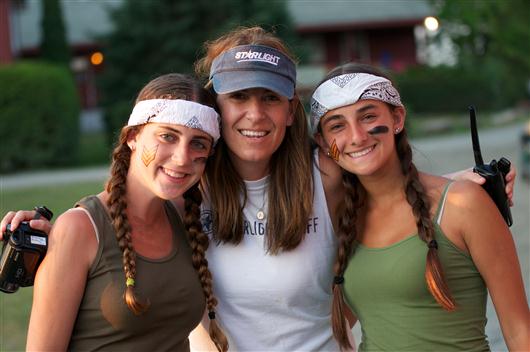
If you submit prospective babysitters through background and reference checks just for a date night with your spouse or significant other, then you probably have an extreme interest in just who will be taking care of your children at summer camp.  Thanks in part to movies and television, many parents have images of young, barely out of high school teenagers filling counselor roles.  However, the truth is that camps conduct searches for months to locate and fill leadership and key staff roles with mature, knowledgeable professionals, many of whom work with children in some capacity year round.

Even though camp is still six months away, chances are that your child’s summer camp (or prospective summer camp) has already kicked its recruiting season into high gear.  To find counselors, many camps traverse college campuses across the country searching for college students and recent grads who are pursuing careers in education, social work, youth athletics, or other fields related to working with children.  In order to avoid staff members that are too immature—or mature—the target demographic for counselors is typically between 20-25, although some camps will vary from this in certain scenarios or for special needs.  A successful camp counselor works 24/7 and must be mature enough to make split second decisions that concern the welfare and well -being of children.  Although counselor staffs tend to have relatively high turnover rates from year to year because college students complete college and move on to full time jobs that they cannot leave for an entire summer, leadership staff tends to return more regularly.

Camp leadership is often comprised of seasoned teachers and coaches who have been involved with summer camp in some capacity for several years or even decades.  Some of them grew up as campers and worked their way into leadership positions beginning as counselor assistants or counselors.  Others began as counselors and loved the experience so much that they have returned from year to year.  Still others are hired directly into their leadership roles after extensive searches by camps to find the best candidate for the role.  However their camp experience began, one thing that all camp leaders have in common is that they not only have extensive experience working with children, but thorough knowledge of the intricacies and behind the scenes goings on of summer camp.

Aside from leadership staff, other mature individuals are employed to staff health and dining facilities as well as offices.  In fact, parents are sometimes surprised to learn that so many mature, experienced professionals spend their summers at sleepaway camp.  But, for many, the experience, as it is for the children, is beyond compare.  Those who return each year will tell you that they wouldn’t consider spending their summers anyplace else.  They love what they do, they love their campers, and they love their camps!  How many traditional jobs can boast such high morale and collective years of experience?

Camp Starlight Reunions–Warming Our Hearts Even in the Cold Days of Winter

Tuesday, January 15th, 2013

In the cold of winter, it’s sometimes hard to conjure up those warm and sunny feelings of the days on the beautiful grounds of Camp Starlight. Growing up as a camper at Camp Starlight, this time of year would always bring with it a special excitement for me and my camp friends. Camp Starlight Reunion was almost here! With the New Year right, I realized that before I knew it, I would be back with my summer family!

There is something about spending time with the most amazing people you know that makes time stop. How do seven short weeks seem like a lifetime, almost the same way that an afternoon in cold January seems like forever? There is always such an amazing buildup to the reunion, including planning sleepovers with your bunkmates, and getting back in the camp mode.

My bunkmates and I had traditions starting from our first pre-camp reunion sleepover in 2001. We would sleep at my house and in the morning, my dad would make us French toast. It was a new tradition that added to our endless list of summer traditions. We would always reflect on the past summer, and make plans for the summer to come. There is nothing better than being with your camp friends. The reunions every January were just a taste of the summer to come, and who doesn’t love getting some new, amazing Starlight  gear at the end of the day!The idea of our winter lives being shared summer family  is exciting, and when you are with camp friends, it always feels right!

Julia W.