
Author Archive

We at Camp are Thankful for…

Saturday, November 26th, 2011

Every year around this time we pause to reflect on those aspects of our lives about which we are most thankful.  To celebrate this turkey day, we thought we’d share what makes us most thankful for summer camp:

Our camp families: Without our campers, there would be no summer camp.  We’re thankful you value your summer camp experiences so much that you return every summer, and that you continue to build and carry on the traditions that make America’s Finest Summer Camps so special.

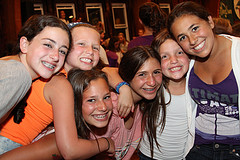
Our camp family: The unique family we are all a part of each summer.  The bonds that campers and staff create truly do last a lifetime.  We love every moment of the summer when we are laughing, playing, singing, and sharing together.

Camp Memories: Every year we bring home new memories that motivate us to make the next summer even more special than the previous.  Talking with our families and camp friends about our summers and sharing in each others’ unique experiences while at summer camp are some of our favorite times during the winter months.  They help us get over our “camp sickness” and carry us through those months between summers.  Speaking of camp friends…

Camp Friends: Every camper knows that camp friends are friends for life. Our camp friends share some very special memories that one can only get at summer camp.  Our camp friends are also great at helping us get through those ten months that we’re not at camp by reminding us of just how special summer camp is, whether it’s through the distance that makes seeing each other at camp every summer so special or the closeness of having a camp pal who  “gets it”.

Amazing Staff Members from all over the Globe: Summer Camps are only as good as their staff, and we’re thankful that we have some of the most amazing staff anywhere in the world.  Each summer, you come from all over the world and commit yourselves 24/7 to insuring our campers have a safe, amazing summer.  We know it’s hard work, and we are grateful that so many of you find the experience so gratifying that you return year after year.

The Breathtaking Scenery of Maine and Northeast Pennsylvania: We love where our camps are located almost as much as we love our camps.  The beautiful woodlands of Maine, the mountains of Northeast Pennsylvania, hiking paths, the lakes that are such a big part of our camp experiences and traditions, and the wildlife all make the perfect backdrops for our amazing campuses.

The Beautiful Campuses that are our Summer Homes: Just like the houses we live in the other ten months of the year, each of our summer homes has its own energy, homey feeling, and special places for gathering, playing or contemplating. We’re proud that ours are some of the most awesome facilities in camping and look forward to continuing to build and improve them each summer.  We know our campers eagerly await opening day when they finally get to see how camp has changed since the previous summer and what new additions might be waiting for them.

Our Year-Round Staff: Yes, even summer camp requires a staff to work year-round.  After each summer, they go back to their offices and immediately begin planning the next, thinking about what new programs we might add or how we might make existing ones better.  They begin traveling, recruiting new staff members.  They create newsletters, Tweets, and blogs.  They answer the phones when you call.  They plan the menus.  In short, they tirelessly build each amazing summer day by day.
Being a Part of Such an Iconic American Tradition:  All over the world, American summer camps are an icon of Americana.  They’re unique to America and so many have found them inspirational that there have been movies and television shows that feature them, as well as books and songs written about them.  We are also grateful that many of our international friends are beginning to see the value in the American summer camp experience and, increasingly, are joining us from all corners of the globe.

We hope this holiday season that we’ve inspired you to contemplate what it is about camp that you’re most thankful for and how it has enriched your life.  We encourage you to share those thoughts with us.  We’d love to hear them!

Happy Holidays, Everyone!
It’s a Camp Thing

Friday, November 18th, 2011

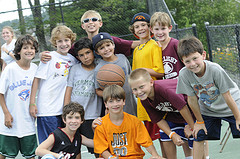
If you have children who attend sleepaway camp, work at a sleepaway camp, or know anyone who attends or works at a sleepaway camp, chances are that you’ve heard this at least once in your life: “It’s a camp thing.”  For those of you wondering what that means, here’s an exclusive look inside the world of sleepaway camp and exactly what constitutes “a camp thing”.

We’ll begin with a definition.  “A camp thing” is an experience or tradition that is unique to summer camp.  It’s also actually “camp things” rather than a singular “thing”, since there are a host of experiences exclusive to the summer camp environment.  For instance, have you ever sang a song about pretending to have a moustache on your face or danced around the dining room waving your napkin?  Nope?  Yep.  “Camp things.”  How about taken part in a competition, spread over several days, that divides the entire camp into two teams and requires contestants to do such things as cover their heads with shaving cream so that a teammate can attempt to make cheese curls stick to it or dress in team gear that includes crazy garb such as tutus, mismatched socks, and face paint?  Nope?  Do you know why?  They’re “camp things”.  Ever sat alongside several hundred other people around a campfire while you watch friends and staff members perform crazy acts, sing songs or participate in games?  Nope?  Yeah…it’s another “camp thing”.

In case it’s not obvious, “camp things” happen every day at camp, from that first moment when you get off the bus and see your camp friends and your new counselors holding your bunk signs for the first time to the last when you’re saying ‘goodbye until next summer.’  Camp things are being part of a league sports team, whether it wins or loses, going on a special trip out of camp to get ice cream, performing rituals and eating s’mores around a campfire, sitting with your friends at cookouts, taking part in the traditions that are unique to each and every summer camp, and understanding the feeling of being part of a camp family.  Camp things are having sleepovers with your bunk or having a venue in which you and your camp friends can pretend to be a rock band, DJs, or magicians.  Camp things are that special inside joke that your friends  share all summer, end-of-the-summer trips out of camp, sing-a-longs when you’re arm-in-arm with your camp friends.  And hugging some of your best friends while singing your camp alma mater and watching candles burn or fireworks explode, knowing that you might not see them again until next summer, is definitely the most precious of “camp things”.  If only everyone could experience “a camp thing”…

Taking One for the Team

Saturday, November 5th, 2011

They’re a staple of summer camp lore…Olympics.   They’re steeped in tradition and every American summer camp has one, a competition usually held toward the end of the summer that, over multiple days, splits the camp into two teams and pits them against each other.  How can something like this be valuable when summer camp emphasizes family, togetherness, and spirit?  In short, these special season-ending programs give campers (and staff) the opportunity to demonstrate what they’ve learned over the summer.  In order to succeed in the various challenges that comprise these competitions, campers must draw on the experiences they’ve had and lessons they’ve learned over the summer.  They’re challenged in everything from sports to trivia.  But perhaps what’s most amazing about these events is that, in the end, it’s not about which team wins or loses.  It’s about being part of something bigger than the individual…a team, a mindset, a family, and a community.

Make Your Camp Counselor Experience an Effective Tool in Your Job Search

Thursday, November 3rd, 2011

So you’ve spent a summer—or maybe the better part of your college career—working as a summer camp counselor.  You’re nearing graduation and you’re starting to pull together your resume for finding a job in the “real world”.  You’ve been wondering, ‘How do I adequately articulate my summer camp experience?’  You’re worried that it will sound trivial to hiring managers, but you know that what you gained from your camp experiences are some of the most valuable skills you’ve learned.  You’ve learned the art of communication, having worked with people all over the world and children ranging in age from seven to fifteen.  You’ve learned the importance of discretion; your campers didn’t need to know EVERYTHING about you.  You’ve learned how to negotiate, mediate, and maintain a positive morale, having coached your campers through swim tests, disagreements, activities, stage fright, and just about a million other things.  You’ve learned time management skills.  How many other job applicants can motivate twelve campers to move across campus from soccer to woodworking in five minutes or less, consistently coax them out of bed at 7am, and convince them that it’s time for lights out after an exciting evening of activities? You’ve learned how to use creativity to solve problems and are MacGyver with a few jars of paint, construction paper, a little bit of fabric, some scissors, and maybe a little glitter…add feathers and beads to that mix and you can practically re-invent the wheel.  In fact, you’ve learned so many things as a summer camp counselor that you’re not even sure how you’re going to fit it all onto one 8 ½” X 11” sheet of paper, nevermind about your other job experience. So how do you convey the importance your summer camp job experience has had on your life in a way that hiring managers will see the value in it, too?

First, as sentimental as those experiences were for you, a hiring manager isn’t looking for the screenplay to the next The Blind Side.  They’re looking for prospective employees who can efficiently yet effectively and specifically communicate their skills and abilities in a very concise manner.  This means keep it relevant and as action packed as most of those days at summer camp were.  Convey how active your summer camp job was through the verbs that you choose.
Second, without being too broad, make your resume sing of how well rounded your skill set is because of your summer camp counselor experience.  Employers love diversity.  A resume that sings of it will be sure to get a hiring manager’s attention.

Third, do your homework.  Job hunting is not a one size fits all endeavor.  You need to know and understand not only what you are looking for, but what the company to which you are applying is looking for as well.  If there is a particular quality you feel you possess because of your summer camp counselor experience that makes you a good fit for a position or a company, highlight that one quality in your cover letter.  Explain specifically how you feel your summer job experience and knowledge will translate into the new role.    Having experience is one thing.  Demonstrating that you understand how that experience can be integrated into others speaks volumes.

Fourth, don’t be afraid to remind prospective employers, either in your cover letter or at the interview, that being a camp counselor is a 24/7 job.  Employers are attracted to people who aren’t afraid to throw themselves heart and soul into their work.  What’s more heart and soul than being on duty 24/7?

Finally, be prepared.  Be prepared to tell a hiring manager at an interview EXACTLY why you feel your summer camp experience gives you the edge over other applicants.  When asked, don’t go into a lengthy mumble that basically amounts to a rehash of your summer(s).  Show the hiring manager that you’ve thought long and hard about how your summer camp work experience is relevant to your future and that you understand specifically how to extract your experiences and apply them to other areas of your life.  Most importantly, give examples, give examples, give examples!

Learning Self-Reliance at Summer Camp

Thursday, October 27th, 2011

When the time comes to make the decision about sending a child to summer camp, many parents worry because it will often be the first time their children will be “on their own”.  How will they decide what to wear, what to eat, and in which activity periods to participate?  Easily overlooked is the staff of young, yet well-trained staff just waiting to help campers with such decisions.  However, essentially to parents, it’s the first time their children will be making a lot of their own decisions, and it’s nerve-wracking to think how they will do not being under their parents’ watchful eyes.  But wait!  Isn’t this what parents have been preparing their children to do from day one?  The new found freedom and independence children gain at Camp Starlight gives them the chance to exercise the tools their parents have instilled in them and, further, develop self-confidence and learn reliance.

By learning to do more things on their own, self esteem booms and children feel more comfortable trying to new things as well as further engaging in familiar activities.  This type of development is a different sort of development children acquire in the classroom.  However, it can lead to higher performance levels when they return to the schoolyard after a summer at sleepaway camp.  By learning that putting themselves out there and making decisions for themselves while in a summer camp setting leads to success, children often become more assertive in the classroom as well.  Even more exciting is that parents may find their children taking more ownership of their personal areas and roles in the home life.  They just might clear their own dinner plates once in awhile without being asked!

When a child returns from summer camp, a parent certainly should not expect their “organized chaos” children to run back into their arms as “hospital bed corners” children.  But they can look forward to a child who has a boosted self-esteem and a greater sense of independence.  This change exhibits itself in different forms, whether it’s the highly sought after unsolicited plate clearing, the desire to sign-up for new clubs or teams, or even just less anxiety when heading off to a class full of new, undiscovered friends.  No matter the manifestation, the results of allowing your children to take the step toward individuality and self reliance that they will find at summer camp are surely going to supercede the few times during the summer that you let yourself wonder, “Does he know to floss before he brushes?!”

Lindsay

Now is the Time To Start Choosing a Summer Camp

Saturday, October 22nd, 2011

The leaves are falling off the trees and the weather is starting to cool down, but it’s not too early to start thinking about sending your children to summer camp next summer.  There is certainly no shortage of American summer camps and finding the right one for your children is essential to their success there.  There’s a lot to think about, which makes now a great time to start thinking about what you want in a camp.

Traditional summer camps are a great way to introduce children to summer camp because they offer a broad and well-rounded experience.  Children still trying to find their niche in a sport or hobby find great success at these camps because they’re given opportunities throughout the summer to take part in many different types of activities.

The length of the summer camp you choose is also important.  Most overnight camps accept campers from the age of seven.  When considering camps, it’s key to consider your family’s lifestyle, your children’s other activities and commitments, and even your children themselves. Many embrace the traditional seven week experience because it removes the stress of trying to figure out how to keep children active and entertained during summer vacation.

Consider how far away from home you want your child to travel as well.  Some parents prefer to send their children to a summer camp within a few hours of home while others view summer camp as a way to introduce a global perspective to their children and send them abroad to attend summer camp.  This is particularly becoming a trend in Europe, where European parents are deciding that they’d like their children to experience traditional American summer camps.  However, increasingly, parents from all over the world are making this decision as well.  Many American parents find the amazing reputations, beautiful campuses, and the breathtaking scenery of Northeast Pennsylvania idyllic and send their children from as far away as California, Florida, and many other states.

The structure of a camp’s program should be given careful consideration as well.  As they grow older, most campers like to make decisions about their daily activities at camp, and Camp Starlight gives them the opportunity to do so.  However, we find that younger campers, especially those new to summer camp, prefer a more structured program with most of the decisions about their daily activities made for them.

Once you have decided what type of camp, length, location, and program are right for your child, you will likely find your search narrowed to a manageable number of camps.  Since you are reading this blog, you have found Camp Starlight’s website and are on the right track.  We also invite you to check out our Facebook page, and sign up to follow our Twitter feed.  By doing this now, you will give yourself plenty of time to watch, read, and listen.  If you are unfamiliar with camp, you will be pleasantly surprised at how active our summer camp community remains throughout the winter.  In fact, many Starlight families will tell you that camp never really ends for them—and that’s a good thing!

One of Camp Starlight’s Favorite Pastimes…

Thursday, October 20th, 2011

“Take me out to the ball game,
Take me out with the crowd;
Buy me some peanuts and Cracker Jack,
I don’t care if I never get back.
Let me root, root, root for the home team,
If they don’t win, it’s a shame.
For it’s one, two, three strikes, you’re out,
At the old ball game.”

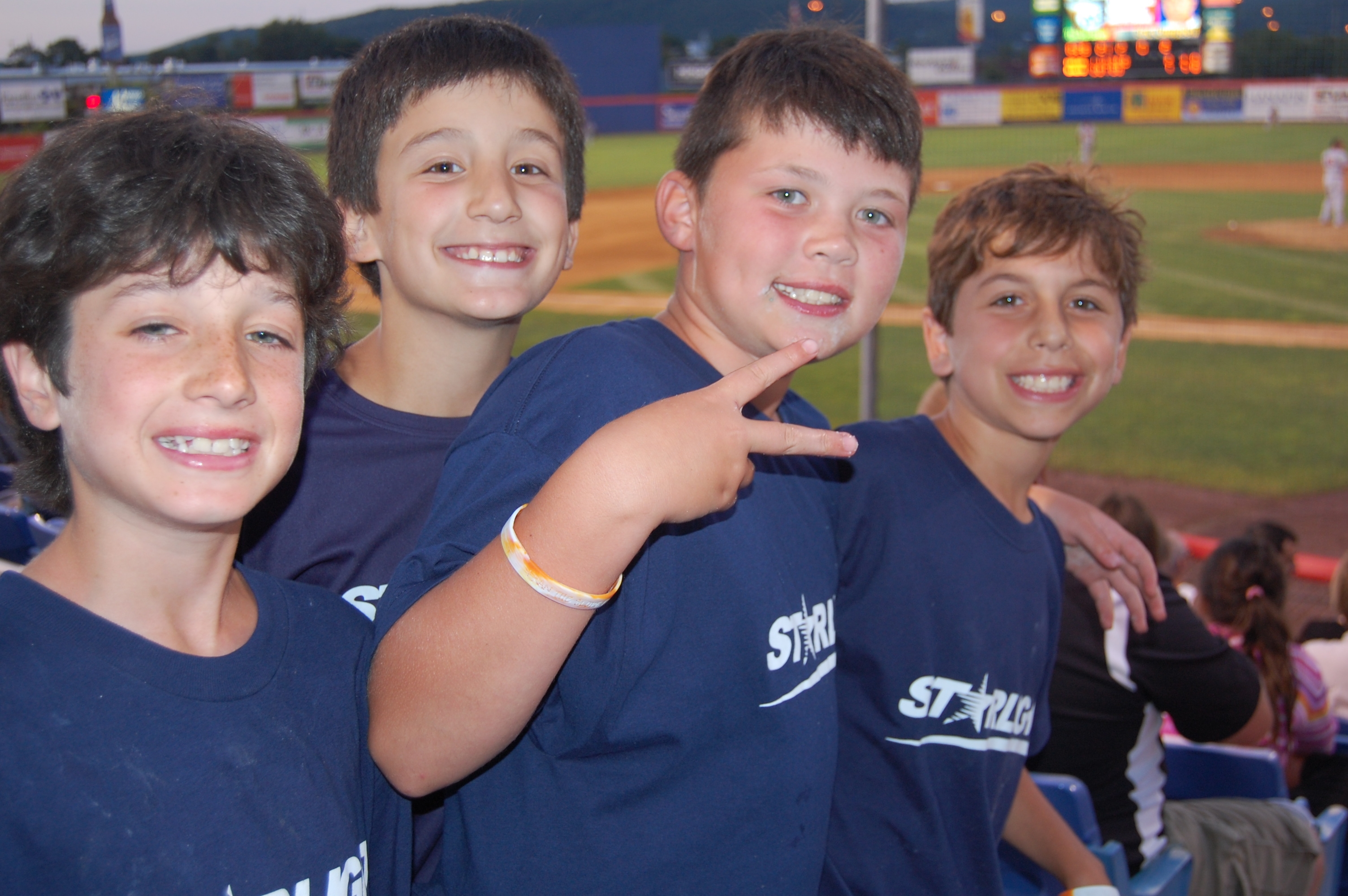
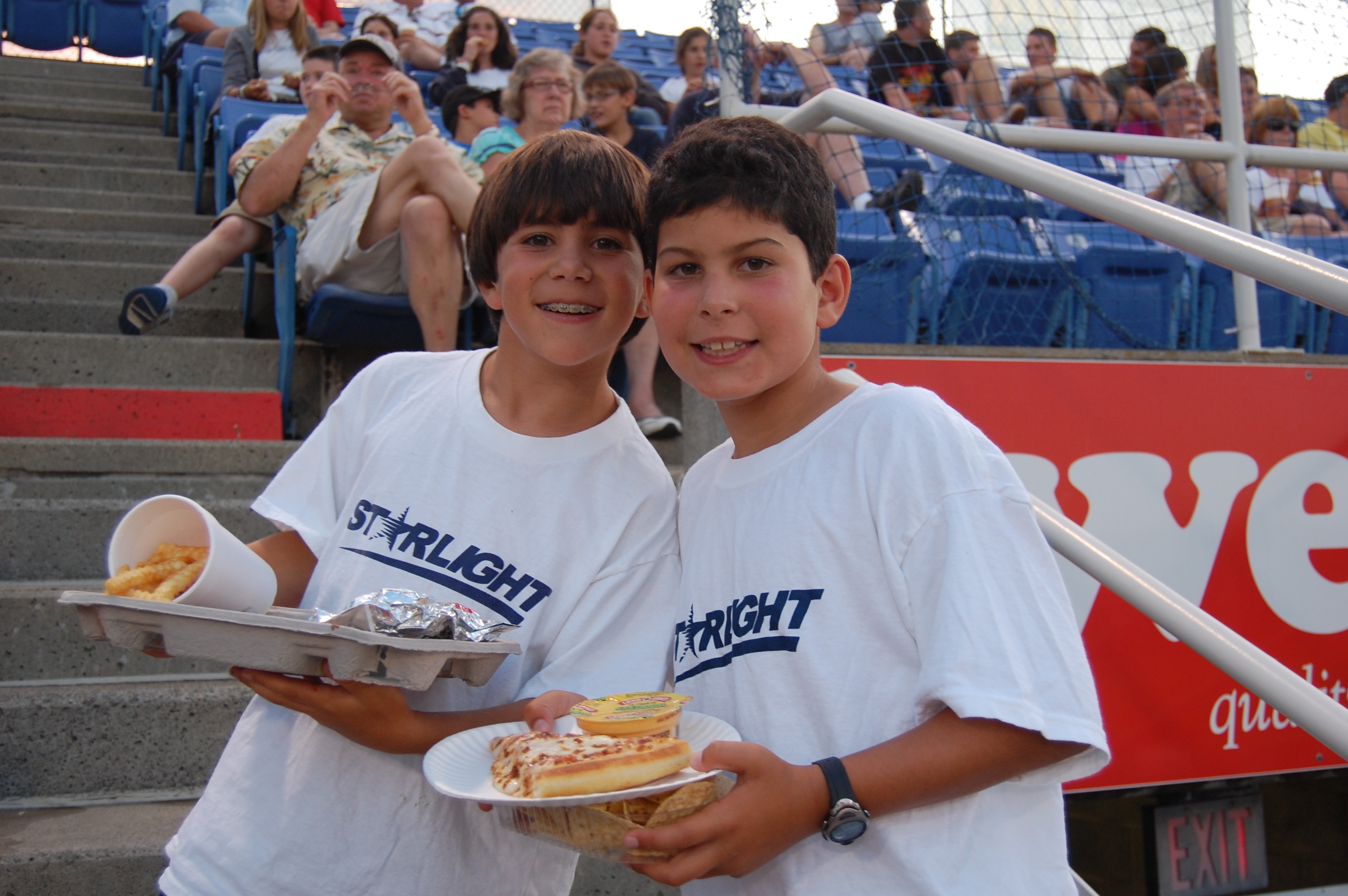
With the World Series in progress, many baseball fans can be heard humming or singing this familiar tune.  All of the campers at Camp Starlight find themselves singing it at least one time throughout the summer when the Binghamton Mets and Scranton Yankees become the home teams of Camp Starlight.  Whether they are diehard baseball fans or those who simply love to indulge in stadium goodies like popcorn, peanuts, and hot dogs, there is nothing better for Camp Starlighters than walking to their seats while hearing the roar of the crowd, the excited voices of the sports commentators, and the crack of the ball hitting the bat under the bright stadium lights After a trip out of camp to see a game, our campers proudly sport souvenirs–baseball caps, team emblazoned pens or pencils with which to write home, and even sweet snacks with the team’s logo—with smiles on their faces!  We cannot wait until the 2012 summer camp season to get back to the ball park.

Qynn

Create a Camp Atmosphere All Year Long

Saturday, October 15th, 2011

Just because your children are no longer at camp doesn’t mean you can’t create a camp atmosphere in your home.  There are several things you can do to keep the camp spirit alive all year long.

This doesn’t have to be a radical flip of the switch that completely eliminates conveniences and luxuries from your lives.  In fact, such an act is probably not very realistic for many families.  But taking small steps to reduce your children’s reliance on things such as television, video games, and cell phones is a great way to remind them that don’t need them as much as they think they do.  Designate a day or two each week in which you won’t turn on the television or play video games.  Have a family game night instead.  Board games and card games are a great, light-hearted way to bring the entire family together for a few hours.  Turn off cell phones during meal times, before a designated time in the morning, and after a designated time in the evening.  Yes, with the invention of smart phones, we’re becoming increasingly reliant on these convenient little gadgets, but you may be surprised at just how much you enjoy the peace and quiet of a few hours without them each day…and, your family will also likely remember just how much they appreciate having a conversation with someone who is not looking at their cell phone or texting the entire time.

Keep supplies for creative bursts.  Arts & Crafts, Eco Science, and Nature don’t have to be activities restricted to the camp setting.  In fact, many of the projects that your children do at camp can quite easily be done at home, and they’re a great way to fill an afternoon or evening on which you’ve decided to have a break from television and video games.  There are books readily available that walk you step-by-step through such popular camp projects as tie-dying, candle making, beading, shrinky dinks, Mentos geysers, goo, and many more.  YouTube also has a host of videos that demonstrate kid friendly home science and nature experiments.  Keeping a closet or a chest of standard supplies for these types of projects will prevent you from having to make a shopping trip every time the kids want to have some summer camp style fun.

Have a “campfire”.  You might not have a backyard big enough (and there may be some local ordinances against this, even if you do), but consider having a backyard fire.  A patio fire pit, if you have one, is actually ideal.  An operable indoor fireplace works, too.  Make s’mores, tell stories, share memories.  This makes for a great evening to invite friends over because, as every camper will tell you, the more the merrier at a campfire.  If you live in an area in which weather permits, actually taking a weekend camping trip is always fun, too.

Start a garden (if you have a yard) or cook with your children once a week.  Gardening and cooking programs are popular at camp.  Even if you don’t have the space in your yard, herb gardens are easy to maintain and can be grown indoors.  Besides being enjoyable and fun, cooking is a valuable life skill for children to learn.  Let your children look up healthy recipes, talk about nutrition with them, and, most importantly, let them do the work in the kitchen.

Have regular family “out of the house” trips.  At camp, children regularly take “out of camp” trips to places such as local sporting events, the movies, or bowling… They look forward to these trips as a special treat and time to create some very special memories with their camp friends.  Why not make special memories like these as a family?

By making just a few (fun) adjustments, your entire family can enjoy the spirit of camp throughout the year, and it just might make those ten months of waiting a little more bearable for the kids!

Being a Camp Counselor Builds Skills for Your Future

Friday, October 14th, 2011

Most of hype you hear about why you should be a camp counselor involves fun, friendship, and sunshine!  However, it may come as a surprise that one of the best reasons to become a camp counselor is the impact it will have on your future career.   There are few better ways to spend your summers than to have an experience that not only offers you the opportunity to enhance your teaching and coaching skills but to have fun while getting paid!  College students who are education, sports administration, and recreation majors can easily build their resumes while earning college credit too.  Some of the things you don’t realize you will get out of camp…social development, professionalism, working in a group setting, planning on the spot, supervision, conflict resolution, and problem solving.  On top of all of that getting to work with children is so gratifying and getting to work in the fun outdoors during the summer is desirable too.  And did we mention FUN?

There are so many benefits to working at camp if you are a college student majoring in any of the aforementioned areas.  You naturally start to build leadership skills that are natural to a classroom or a team setting.  In your daily life at camp, the activity periods, bunk responsibilities, and general camper caretaking are all opportunities for developing future classroom management roles as well as teaching and coaching tactics. The responsibility you have for children at summer camp is a common thread to teaching and coaching.  But at camp you’re given a fun environment where you’re developing in all these ways while you are also helping to build the kids’ self-confidence, skill base, and further childhood development!

Alyson

Summer Camp: Defining Routine and Ritual

Friday, September 30th, 2011

Routines.  Everyone has them.  For some, they encompass everything that takes place from the time we wake in the morning until we go to bed at night.  For others, they come in short bursts throughout the day, such as at mealtimes or bedtime.  However, establishing routines as daily parts of our lives is important, especially for children.  Childcare experts agree that establishing regular routines for children is essential for healthy development.  The Center on the Social and Emotional Foundations for Early Learning reports that “Studies have documented that schedules and routines influence children’s emotional, cognitive, and social development.”

It’s no secret that summer camps provide loose routines that allow room for healthy creative development through structured daily programs and schedules that maintain consistent meal, activity, and bedtimes.  Maintaining a routine throughout the summer is also valuable in easing the transition from summer to fall and back into summer again.  However, one special aspect of summer camp that is often overlooked is that it helps children learn to understand the difference between routine and ritual—what makes one necessity and the other tradition.

Barbara H. Fiese, Ph.D., Syracuse University, defines routine as something that “involves a momentary time commitment so that once the act is completed, there is little, if any, afterthought.”  However, she defines ritual as “symbolic communication” that has “continuity in meaning across generations.”  Rituals take place within the home family setting.  However, for children, it’s not always clear how to tell the difference between what is done simply to be done and what is  done because it’s significant to their heritage.  This is where the summer camp ritual takes on a special significance.  Even executives such as Michael Eisner have publicly recalled the important role that summer camp rituals have played in their lives.

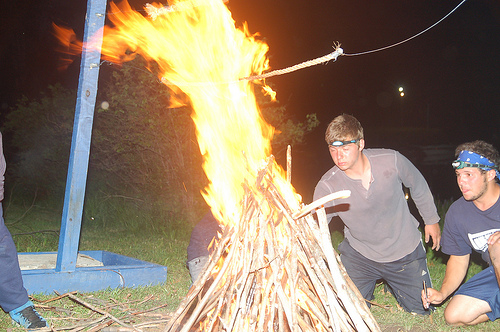
Summer camp often draws a distinct line between routine and ritual.  Campers understand, for instance, that cleaning their bunks or cabins everyday is part of a routine.  That following an activities schedule is part of routine.  That hearing TAPS in the evening to signal bedtime is a part of routine.  They, too, understand that campfires, however regular, are rituals.  They are more than just a fire that they gather around to eat s’mores.  Campfires have meaning that goes far beyond the fire itself.  The same can be said about opening night shows, closing, and fireworks.  Campers understand that these are not just routines done merely to achieve a goal.  They’re rituals that make their summer camp the place that it is and them a part of it.

By being able to tell the difference, children are able to accept routine as something that needs to be done and prevent rituals from simply becoming routine by understanding the value in them.  Dr. Fiese says that children will often revisit memories of rituals in order to “recapture some of the positive.” experience.”  This perhaps explains why so many camp rituals remain sacred to campers far passed their camping years.   At Camp Starlight, several rituals come together throughout the summer to create an atmosphere of family, friends, and tradition:

The rituals begin almost from the moment campers arrive.  The Opening Night show is a first night tradition in which the staff formally introduces itself in always creative and entertaining ways, veteran campers and staff reacquaint themselves with some of their favorite sing-along songs (Singin’ in the Rain, Can’t Smile without You, and the Starlight Alma Mater, anyone?), and campers and staff who are new to Starlight become familiar with one of the most symbolic and important gathering places on the Camp Starlight campus—The Starlight Playhouse.  For everyone, it’s the initiation into the Starlight family.

Campfires play an important role at Camp Starlight throughout the summer as well.  At the beginning of camp, they help campers and counselors alike bond by setting a theme and introducing Starlight values.  At the end of camp, as the scenes of bunk plaque presentations to directors Allison and David, they provide closure.  Bunk plaques are emblems through which each bunk has the opportunity to show what its campers and counselors are taking away from the summer.  The Starlight Dining Room is adorned with them and everyone at Starlight spends countless hours reminiscing about and reflecting on their significance.

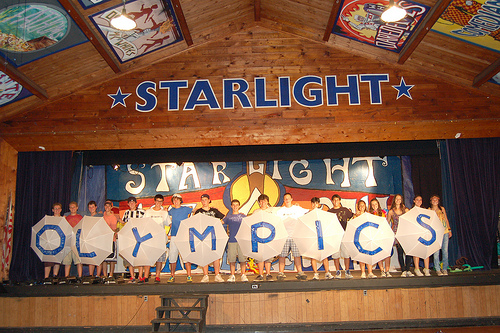
The end of the summer at Camp Starlight is full of rituals that bring the fun to a meaningful close.  Every year, around the first week of August, campers can be heard chanting “1,3, 5, 6, we want Olympics!”  The always secretive Olympic break is a hot topic of conversation from the day campers arrive and,  inevitably, one of the most exciting moments of each summer.  But perhaps the most unique thing about Olympics is that even though it’s a competition, it’s actually about coming together as a family and respecting how each and every individual makes valuable contributions to that family.  Within Olympics are such valued rituals as the always crazy and exciting Apache Relay, which is a race in which campers are given the opportunity to demonstrate what they’ve learned over the summer; Rope Burn, a sacred event for Senior campers and one that many former campers list for years to come as one of the most significant events of their camp careers; and Sing, an event that comes near the end of Olympics and involves the two Olympic teams dueling through song.  The themes are always awe inspiring, the lyrics nothing less than impressive, and the sets fabulous….especially considering that such a wonderful show is put together in less than a week by some very passionate campers and staff members.  Sing never fails to be as emotionally significant as it is entertaining.

A banquet and a fireworks display (known as the “burning of the lake”) close out the summer.  Banquet is a family meal.  It’s a time when everyone formally says, “thank you” for all of the great times over the summer and exemplary staff members are honored.  Banquet is even more significant for the Upper Senior Girls, who work tirelessly every year to come up with a theme, décor, and a menu.  The “burning of the lake” isn’t just any fireworks display.  It’s symbolic in many ways.  It’s a night when everyone says goodbye, when the camp alma mater takes on a different kind of significance for many older campers, and the year is quite literally burned away to make room for the next.