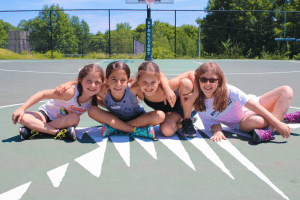
 In a world where third graders have cell phones and middle school students are striving to be “Insta-famous,” it’s no wonder teachers, and parents are noticing that students lack basic interpersonal skills needed to be successful in the real world. This is why more and more adults are actively looking for ways for young people in their lives to connect with others and improve their communication skills. Camp Starlight is a great option for students not only to spend the summer having fun and trying new things but also provides a safe space for them to work on their interpersonal skills, meet new people and build relationships organically.
Listening
Being successful at camp means being able to listen to rules and expectations, follow directions and adhere to a schedule. Campers have a lot of freedom to make their own choices, but there are times when their safety, health, and wellbeing are dependent on listening to counselors and staff. Counselors make it a point to ensure all campers feel heard and demonstrate active listening strategies when campers are talking. Eye contact, body language, and asking questions are all way counselors show campers they are listening, and campers follow their example.
Campers are expected to listen to each other and avoid interruptions or distracting behaviors while fellow campers are talking. Learning to be a good listener will help campers be successful students during the school year and prepare them to be successful leaders as they enter the workforce.
Decision Making
Good leaders can make important decisions in a short amount of time. They understand how to use all the information that they have, consider their past experiences, common sense, and intuition, and decide with confidence. Campers are given hundreds of chances over their sleep away camp experience to work in their decision-making skills. From which activities they want to try each day to what they want for lunch, campers are trusted to make healthy, safe and smart decisions to customize their camp experience.
Problem Solving
While camp will easily be the most fun campers will have all year, not every moment is rainbows and butterflies. Campers will face challenges during their time away from home, and it may be the first time they are charged with solving big problems without their parents by their side. Counselors are always on hand to guide campers through obstacles and challenges, but encourage campers to find solutions on their own. After a summer at camp, campers are equipped with problem-solving strategies to help them become more effective leaders.
Verbal and Non-verbal Communication
In a world where children and teens do most of their communication from their phones or computers, it’s no surprise that many are lacking opportunities to practice good ol’ fashion face-to-face communication. Since screen time is minimal at camp, campers spend most of their time talking and listening to others, developing things like self-awareness, empathy, patience, conflict management and listening. They learn to read cues given off by other campers, and how to be aware of the way they interact with others, both one-on-one and in a group setting.
Camp helps campers bridge the gap when it comes to the critical interpersonal skills they need to be successful in life. And, as is most of the life skills that campers learn while they swim, fish, act, dance, hike, play, sing and explore, they usually have no idea they’re actually learning something. Every day, campers work on character building disguised as fun and leave camp more well-rounded than they came.



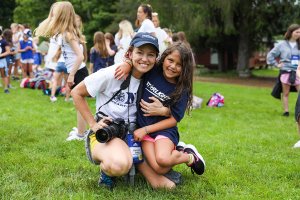 We are thrilled to be welcoming Courtney back as our camp photographer for her second summer at Camp Starlight! Read below to see some of her favorite photos from summer 2018.
 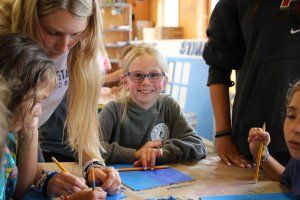 Camp Memories 2018
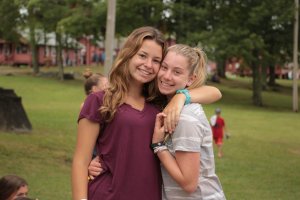 Written by Tessa (Lakehouse B)
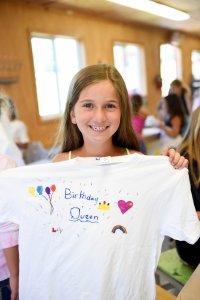 When was the last time you wrote a handwritten letter? When was the last time you went out to the mailbox to find a handwritten letter addressed to you? If you are like most people, receiving a letter in the mailbox instead of an inbox is a special treat to be treasured. The idea that someone took the time to sit down and put their thoughts to you on paper, find an envelope, a stamp and get it out into the mailbox is something to be admired in this fast-paced world, which is what makes receiving mail so special.
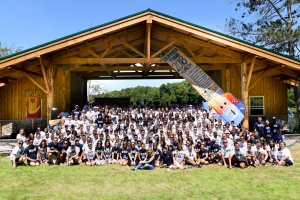 To have a summer of fun and happiness as a counselor, you need to ensure that your campers are having just as much fun and are just as happy. The best way to make sure both you and your campers are having an amazing summer is to connect with them. Here are ten ways to connect with campers that will help everyone have a summer to remember.
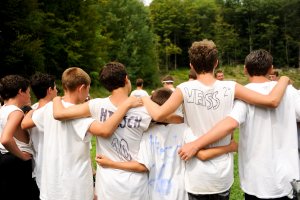 Thanksgiving is a time to reflect and think about all the amazing opportunities and qualities in your life you are grateful for and appreciate. A time spent with family, Thanksgiving reminds everyone to say what they are thankful for and to thank others for positively impacting their life. To celebrate this holiday, here are a few reasons campers are thankful for Camp Starlight.
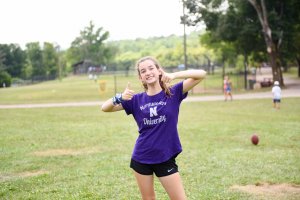 7 years ago, I started attending Camp Starlight. Coming from Florida, I didn’t know anyone here, and I was definitely scared and nervous about making friends. I remember my first day so vividly. I was on the last bus to get to camp, and when I stepped foot on the clinic field, I was surrounded by the group of girls in my bunk who all already knew each other. They had been here lower junior, and I was a new camper in their bunk. I wondered how I would ever get close to these 7 girls who didn’t know how to even pronounce my name correctly, and were already the best of friends. Looking back on this now, I should have noticed that if the rest of my bunk were so close from only spending 7 weeks together, there had to be something truly magical about Camp Starlight.
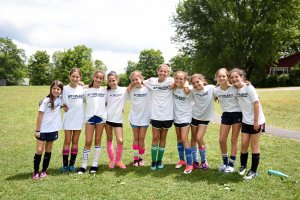 There is something about spending the summer at a sleepaway camp that allows kids and teens to connect in a way they just can’t at school. Maybe it’s the extended time they spend together or the fact that selfies and Instagram and the social media comparison epidemic is taken out of the equation at camp. Whatever the reason, campers are able to interact and build relationships on a deeper level at camp than they can at school or on sports teams at home.
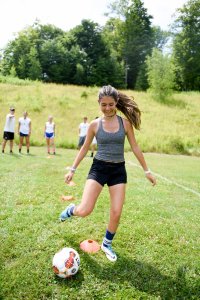 When asked the question, “What’s your favorite part of camp,” I am sure many campers would say everything. Personally when I get asked the same question my response is everything as well. But what does everything really mean? Is it the sunsets on the lake every night? Is it the reveille that wakes me up every morning? Is it the laughter that I share with my friends every day? Or is it all of the small moments that count just as much as the big ones? Over the previous summers here at camp I have finally found the meaning of everything, which is a combination of each and every laugh, smile and memory made at this place. Sometimes small moments can go unnoticed, however appreciating special moments here can go a long way. When I was younger the walk to alumni field from my bunk was a long and tiring experience. The struggle of putting on shin guards then the socks and finally the cleats was a difficult process as an 8 year old. Now, as an upper senior the time spent putting on the equipment and walking to the field is all worth it. Searching for my shin guards, doing cartwheels to alumni, and the little thrill you get when you walk down the steep hill leading you to the rocks or being greeted by Whatley greeting us on the field are all the little things at camp that I appreciate. So, the next time you are asked about your favorite part about camp, take a moment to think about the times you’ve cherished and appreciated no matter how big or small the memory may be because, the underestimated moments are what make you appreciate everything that this camp has to offer.