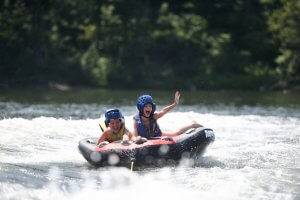
 Everyone remembers his or her first summer at camp. They remember the countdown until the big day, the careful packing and the butterflies as they arrive at camp. When you arrive at camp for the first time, you have many questions and uncertainties. You’re curious about the games you’ll play, the food you’ll eat, and how you’ll like sleeping in a cabin. But before the first day of camp is over, most campers are settling in and finding their groove. If you ask most campers about the things they wish they would have known before their first summer at Camp Starlight, this is what they would tell you:
Camp friends become best friends
There is something about spending every day with the same group of people, experiencing so many “firsts” together and connecting over shared experiences that often combine to create lasting friendships. Camp friends become best friends because the entire summer is spent in such tight community, that it is almost impossible not to form long-term relationships with many of the people you meet at camp. You enter your cabin as strangers, and by the end of the summer you’ve shared stories and secrets and inside jokes, you build trust and encourage each other and listen to each other. Camp friendships aren’t tainted by social media, they’re organic relationships built on shared interests and experiences, and they often last a lifetime.
Being outside all the time is amazing
Some first-time campers worry about spending so much time away from home and away from their beloved smartphones. But if many campers knew all of the benefits of spending time outside and away from their screens, they’d be excited about all of the outdoor adventures waiting for them at camp. Camp Starlight is set on beautiful acres of land, surrounded by beautiful natural landmarks. Spending extended time outside allows you to soak in Vitamin D, breathe in the fresh air, and is great for your mental health. Any campers nervous about the amount of time spent outside at camp will quickly learn that camp is the best place to connect with nature.
There’s no need to be nervous
We know spending a summer away from home can be a little nerve-wracking, but veteran campers would tell you that there is nothing to worry about. Campers who let their nerves get the best of them miss out on some great camp experiences. Counselors work hard to make each camper feel comfortable and at home as soon as possible. While it is normal to feel nervous when trying something new, it’s important to remember that camp is specifically designed to be the safest, coolest, most exciting place for kids and teens to spend their summer. There is a 0% chance that you’ll have a horrible time at camp, so there is nothing to worry about.
Teamwork makes the dream work
The sooner you learn to lean on your fellow campers and counselors and work together, the more fun your camp experience will be. The people you share a cabin with quickly become like family, and counselors become trusted role models who work to ensure you have the best summer possible. The summer camp experience is meant to be shared, and you will have much more fun when you work together with other campers and counselors. New campers may be hesitant to ask questions, but if they know how ready and willing seasoned campers and camp staff are to help, they’d feel a lot better about seeking out help. Everyone at camp is there to help each other!
It would be the time of my life!
You will have many assumptions and expectations about your first summer at camp, but there is one thing you can know for sure: you will have the time of your life! Most campers get a general idea that summer camp is designed to be a fun place to spend a few weeks, but if you knew what was truly in store for you, you’d be jumping up and down to get here! Seasoned campers can tell you until they’re blue in the face about how life-changing summer camp can be, but there’s only way to really experience it, and that is to sign up for your first summer camp experience!
There are many things you don’t know about camp until you get here. You won’t know many of the camp traditions, how to sing the songs, the fastest way to get to your cabin, or what activities to try. There will be many questions and a lot of things you will have to learn along the way, but if you can come to camp knowing these five things, you’ll be ready to jump into the camp experience!



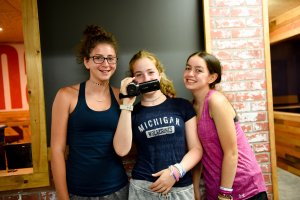 Written by Hayden (Lakehouse B)
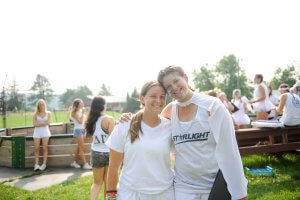 A significant number of our counselors are campers who just can’t get enough of Camp Starlight. Some of our veteran camp counselors and staff members started out as wide-eyed, excited, first-time campers who fell in love with sleepaway camp. The camp experience is ingrained so deep into their life that there’s no place they’d rather spend their summer. Some can barely remember a summer that wasn’t spent at Camp Starlight, and they love it that way.
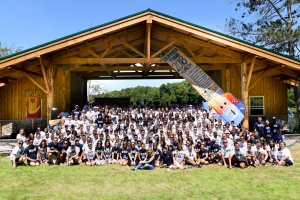 The staff at Camp Starlight is comprised of a wide range of people that hail from countries scattered all over the globe. Camp Starlight becomes a placed infused with so many cultures and new traditions in the summer when staff come from places such as New Zealand, England, Mexico and South Africa. When all these people come to Camp Starlight it can provide campers and other staff members with valuable insight into different lifestyles and help them learn about cultures that differ from their own. It is so valuable to have these international staff members because it helps Camp Starlight become a summer camp enriched with new ideas and cultures. Internationals can help bring new songs to sing around the campfire and new types of friendships bracelets to make for your friends, mixing up the regular everyday American camp customs. They also inspire people to travel and experience new things, broadening minds on different opportunities to take advantage of across the world. It is so important to have international staff so that the campers can still keep learning even in the summer. Even though summer camp is supposed to be a break from school, campers are learning so many important lessons and things about all these different cultures when they come to Camp Starlight. International staff helps campers remain curious and ask questions about things from all over the world, making Camp Starlight a better place for campers every summer.
 Living away from your parents for any period of time is a big adjustment. At camp, campers must learn to do things for themselves and it is through this that independence is learned over the course of the summer.
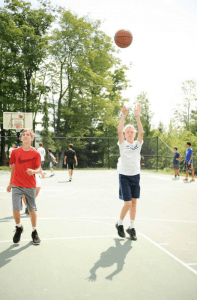 Basketball Lower Senior Boys vs Camp Perlman
 For those of you who don’t know me, my name is Elizabeth E. and I am an upper senior. Thank you for allowing me to come up to talk about the theme of the summer, appreciation, tonight. I would like to start out by saying that 2 of my biggest role models in my life are my older sisters. One is a counselor here this summer. There is 7 year age gap between my oldest sister Sarah and I. So, when I was a lower junior, Sarah was an upper senior. I distinctly remember a time after my lower junior summer when my sister and I were talking about camp and how much we missed it. Sarah turned, looked at me and said, “Elizabeth, you have so many summer left there as a camper. I would do anything to be a junior again and have 8 more summers left at camp. Appreciate it.” Many leagues games, divisional shows, sing-a-longs, and Friday night services later I am now where she once was as an upper senior. I too would do anything to be a lower junior again with so much time as camper left ahead of me. But I would like to think that I took her advice, that I truly appreciated every moment spent here. I now know the importance of stepping back and appreciating every stunning sunset over the lake, every memory made and every one of the 35 girls in my division that I now call family but were once strangers when I was a junior. I don’t know what I would do without them. It’s important to take notice to how much Starlight helps us grow and mature. To appreciate that camp changes us all for the better.
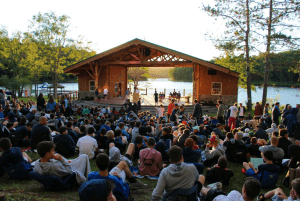 Picture this: a balmy summer evening and the view of the beautifully calm lake stretching out to the endless green woodland. The sun is slowly setting for the day producing an unbelievable sky of soft orange and pink. Everyone is sitting, watching in admiration. But the nature isn’t the only thing everyone is admiring right now because we are seated at the new Starlight Amphitheater!
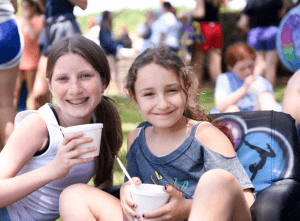 Break out the anywhere chairs— it’s time for a cookout! Hearing their division called on the loudspeaker summons a crowd of hungry and eager campers to the cookout site. While the Seniors serve the chef’s best knishes, hot dogs, hamburgers, and watermelon, they also serve up some hilarious tactics to get the campers enticed by lettuce, pickles, and onions to top their burgers. From lower juniors to CA’s and staff, there is not a knish left to spare. Campers and staff laugh, eat, play games and throw footballs in front of the scenic Pocono mountains.